A label can look right in a PDF and lose a line of type when it wraps around a small jar. That detail matters for Ohio cultivators and processors planning their next print run. In its August 26, 2026 update, the Ohio Division of Cannabis Control says that, beginning June 1, 2027, cannabis transferred to an Ohio dispensary for direct customer sale must meet the updated packaging and labeling rules. The product name, universal THC symbol and Division seal are among the items that must be clearly visible. Buyers supplying other states should review the requirements for each destination. Read Ohio’s packaging and labeling update (PDF).
Ask for the usable label height between the heel and the shoulder, plus the circumference at the label panel. Print the artwork at 100%, apply it to the jar and add the actual lid, tamper band and variable-data sticker. Inspect the closed pack as a customer would see it. Does the seam hide a warning? Does the band cover the product name? Can the batch code still be read? Mark the interference on the sample and move the affected artwork before approving a print run. Repeat on the smallest jar in the range.
A 3.5 g flower label tells you the weight of the contents. A 3 fl oz jar specification tells you its nominal volume. Bud size and density affect how much space the same weight occupies. Start with 2, 3 and 4 oz glass flower jar samples. Weigh the usual fill for both a dense batch and a loose, bulky batch. Close each sample with the proposed liner in place. Check for crushed flower, excess headspace and material caught on the rim. Record the jar dimensions and approved fill alongside the production sample.
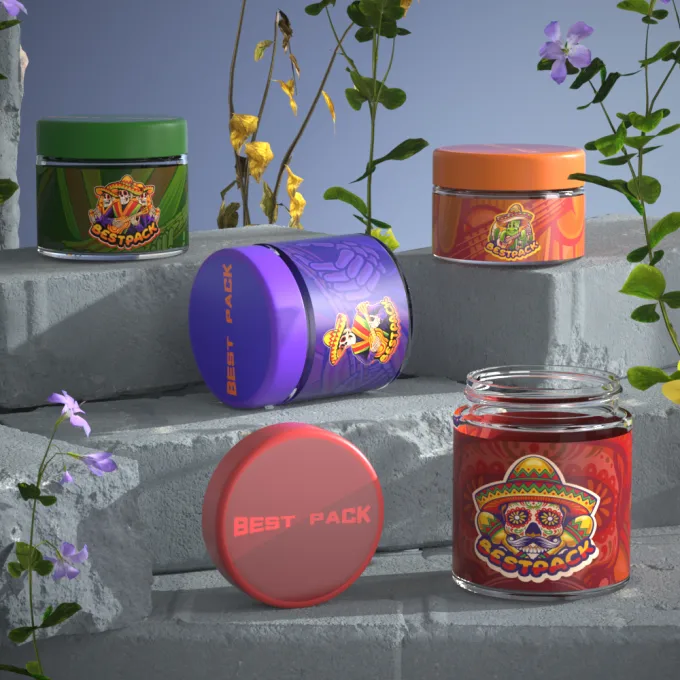 Use the jar and closure together when comparing fill height and label space.
If residue turns up under a lid, inspect the sealing surface, fill height and closure application before changing the glass. Set aside a clean control and compare it with filled samples from the line. Use the closure supplier’s application instructions. For a vacuum-style lid, identify the stainless steel spring disc and sealing ring. An audible click alone cannot establish leak resistance. After handling the sample in the orientations and temperatures expected on its journey, check the rim, liner and outside of the jar for residue. Ask for child-resistance documentation covering the exact container and closure you intend to order.
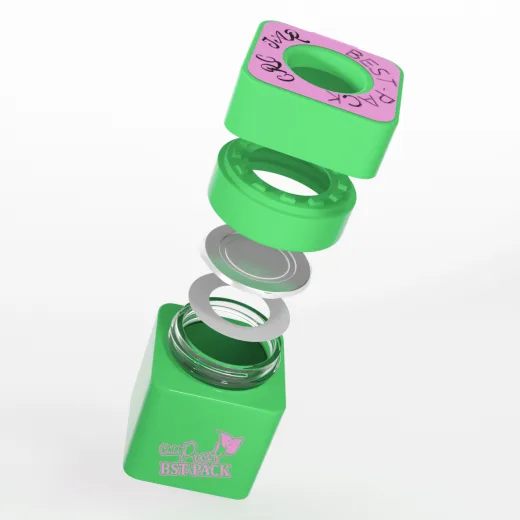 The exploded view shows the closure components to match when ordering samples. View vacuum seal concentrate jars.
Build a case with the intended fill weight, dividers, top pad and shipping carton. Check for glass-to-glass contact, movement and label scuffing. If samples go by parcel but production moves on pallets, tell the test lab about both routes. Ask it to select a distribution test for each relevant shipment and inspect units from the corners and center afterward. See ISTA’s transport test procedures.
Include your sales state, target fill weight, current jar dimensions, closure or liner, label artwork dimensions, delivery ZIP code and expected units per run. If a package has failed, a photo of the exact spot where the label lifts, glass chips or residue appears will help narrow the trial. Request matching jar and closure samples for your U.S. packaging line.